Guaranteed Overcladding System
Older buildings with roof systems or assemblies which are showing the test of time or are underperforming and in need of modernising can be refurbished to meet current and updated performance standards.
Roofs are overlaid for a variety of reasons; They may have long-term issues with water ingress, external sheet failure, or have poor thermal and acoustic performance. Refurbs may be carried out to extend the life of the building, and in the case of leased buildings, offer a better return on investment.
GL Profiles can offer two systems for roof refurbishment. Our first is the GL-TS System, which can be installed when a complete roof strip is found to be the best approach. Our GL-TS System is designed to fix to existing roof structures purlins.
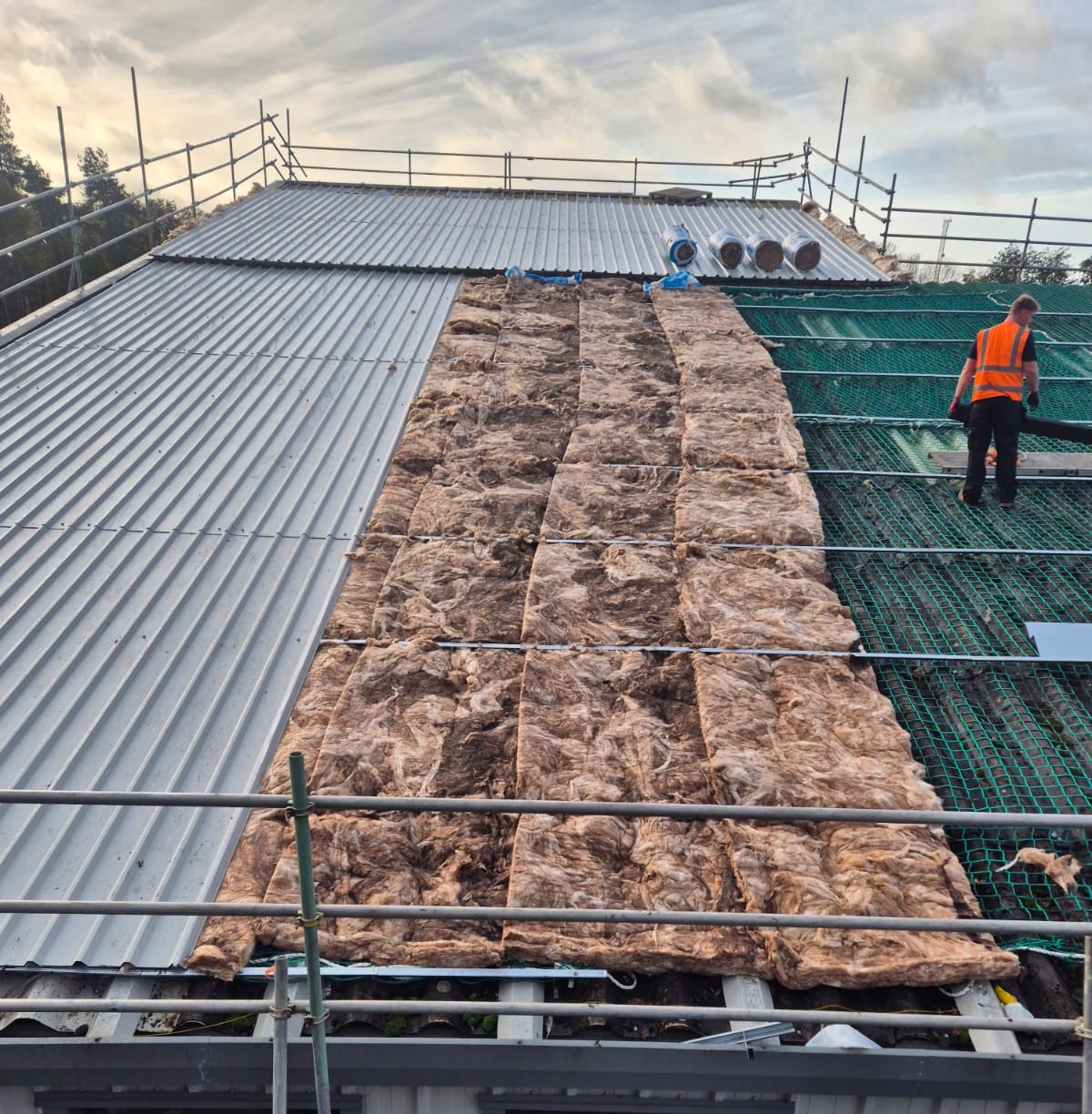
Our GL Refurb system has been designed to go over your existing roof covering. GL Refurb can be applied over single skin, built-up asbestos/fibre cement, built up metal systems or composite panels systems.
When GL Refurb System is being installed over asbestos/fibre cement, extensive testing has been carried out on our top hat brackets, which have been designed by a structural engineer, to give the added reassurance that the top hat bracket has been fully integrated into our GL Refurb system.
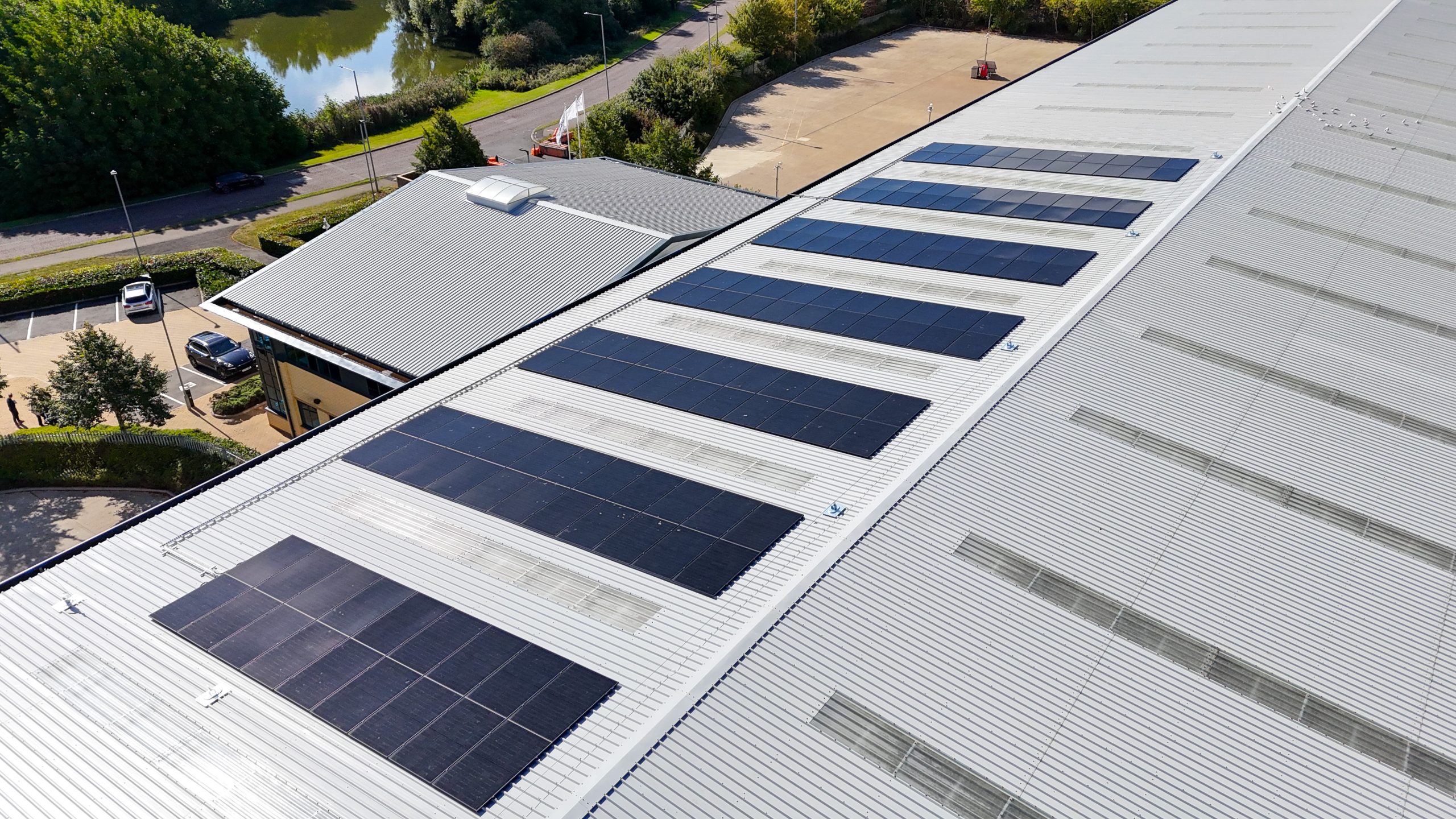
Approved Document L Conservation of Energy for England, U values are impacting on the depth of twin skin systems which are becoming significantly deeper. Sway forces need to be factored into the overall system design. GL profiles have taken this into consideration when designing our top hat brackets.
GL Profiles offer a 25-year guarantee on both systems, to give peace of mind to the landlord that their tenant will not be disturbed for 25 years.
GL Profiles do recommend that a competent person, such as a structural engineer should confirm that the weight of the overclad can be accommodated by the existing structure. On occasions it might be necessary to do pull out tests on the existing purlins.
When carrying out overcladding, it is an ideal time to think about improving the building’s thermal properties, and the additional layer of protection that is added by overcladding naturally increases the insulation depth. Improved insulation not only helps keep a property warm in winter and cool in summer, but also helps reduce energy bills, suggesting that investing in overcladding has long-term financial benefits.
New energy performance standards in England came into force from June 2022. Insulation depths have increased to suit Part L Building Regulations (ADL2) L2A and L2B (Non-Dwelling). Giving U values as low as 0.16 W/m2, which both GL-TS and GL Refurb systems can achieve.
 For full details of the GL Profiles 1st Class Guarantee, which, along with Tata Steel’s Confidex® Guarantee covers our GL-TS System, please click here.
Benefits of Overcladding
- GL Refurb system can provide peace of mind to all parties with load tables for our profile sheets, GL Techbar and our top hat bracket
- Our top hat bracket has been designed by a structural engineer
- GL Refurb system comes with a minimum 25 year guarantee
- Minimal disruption. The existing roof remains in place, avoiding the need to stop operations
- Improves energy performance certificate (EPC) ratings
- Overcladding is a cost-effective alternative to a full roof replacement, significantly less expensive and less disruptive
- Enhanced aesthetics of the property
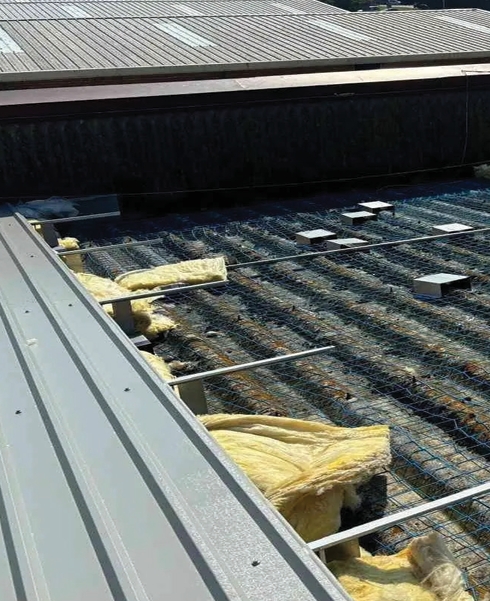
- Encapsulates existing asbestos, reducing health risks and avoiding expensive removal processes. Potentially claim back 150% of the cost, from the refurbishment of an asbestos roof
Land Remediation Relief
Land Remediation Relief can provide tax relief in all commercial property sectors where companies are subject to corporation tax. Unlike Capital Allowances, Land Remediation Relief is available to property owners, investors and developers alike.
Qualifying costs include the removal or encapsulation of asbestos from buildings and relief can be available on developments and refurbishment projects. Contact GL Profiles technical department to get details of our approved specialist partner on LLR claims.
Vapour Control Layer
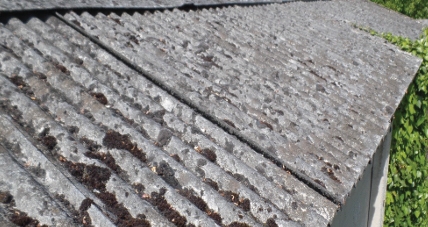
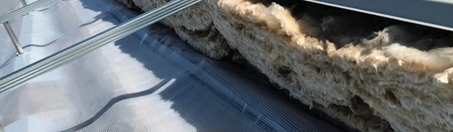
The assessment for a reinforced vapour control layer should be carried out depending on the amount of insulation already installed and the position and effectiveness of the current vapour control layer. If, for example, the existing roof is damaged or leaking, a membrane should be used to ensure that any condensation forming within the cavity does not enter the building through any discontinuities in the
existing roof.
Insulation
Insulation should be installed between the existing roof and the over roof to reduce the amount of condensation forming and to achieve Local Authority requirements. The insulation should be non-combustible, fill the cavity, be tucked under and around the spacers and tightly butted at its ends and sides. As noted above, the insulation needs to comply with local Building Regulations and could be as low as 0.16 W/m2.
Roof Fire Regulation
Approved Document B (ADB), focused on fire safety, was updated on 30 August 2019. It removed the old BS 476-3:2004 National Classification as the main fire performance standard for roofs, replacing it with the European system (BS EN 13501-5). Scotland still uses both systems. This test evaluates a roof’s resistance to external fire but not internal fire exposure.
The European system rates roofs from best to worst: BROOF(t4), CROOF(t4), DROOF(t4), EROOF(t4), and FROOF(t4). Under Paragraph 14.3 of ADBv2, some materials don’t require testing if listed under EU Decision 2000/553/EC and used per national rules. These are considered compliant via “Classification Without Further Testing” (CWFT).
CWFT applies to common, pre-approved products that meet strict EU/UK fire standards without additional testing. They must show consistent performance, follow allowed manufacturing tolerances, and be unaffected by environmental changes.
Two relevant EU decisions are:
- 2005/403/EC – Covers certain steel roof sheets rated BROOF(t1–t3), but not valid in England (which requires t4)
- 2000/553/EC – Lists roof coverings that meet fire rules without testing if national standards, meet the following requirements
- The material type is approved
- It’s at least 0.4mm thick
- It has an inorganic coating or one with low calorific value or mass
Under 2000/553/EC, the GL Profiles roof systems meet these requirements.
Top Hat Cleats
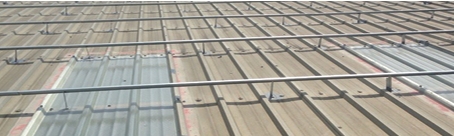
A top hat cleat is a galvanised steel bracket support which provides a base onto which the brackets of our GL TechBar System are fitted. They should ideally be fitted into the valleys of the existing roof and are normally screwed through the whole existing roof construction, whether built up or composite, into the existing purlin.
GL Profiles have had an independent structural engineer design four different sized top hat cleats, which will accommodate many of the different crowns of existing profiled cement/asbestos sheets. Our TH1-TH4 top hat brackets have had calculations produced for roof pitches up to 15 degrees, and have had additional loads applied to accommodate PV panels.
Our brackets are only 60mm wide, which provides you with a practical and safe bracket to handle on the roof.
- GL Profiles recommend that TATA Steel Inspection and maintenance guidance manual is followed. For further information please click here.
- Follow the Regulations 2015 (CDM 2015) govern the management of health, safety and welfare when undertaking construction projects.
- Refer to MCRMA advise note 06 Safe Working Practices on Roofs.
- For further details on GL Refurb systems fire performance, please refer to GL Profiles technical report that was produced by fire consultants Joule Group.
- The roofing system is to be designed and fitted in accordance with GL Profiles technical details and recommendations. Any variance from this may affect 25 year guarantee.